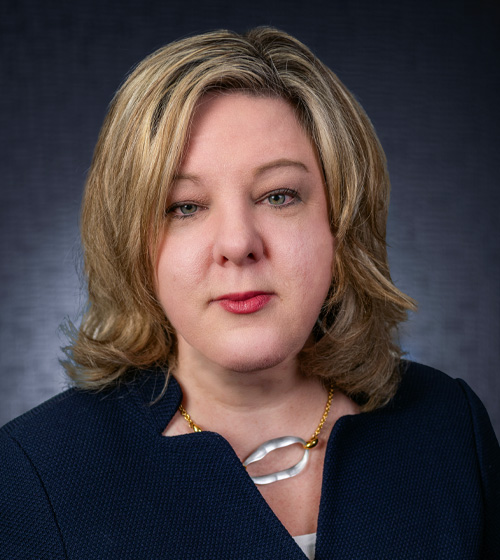
The Mediation, Arbitration & Collaboration attorneys of Goehring, Rutter & Boehm are experienced and active trial attorneys. While maintaining a current trial practice Thomas Frampton, Howard Schulberg and Lea Anderson have gained skills in negotiation and decision-making that lend themselves to helping others resolve disputes through methods of Alternative Dispute Resolution (ADR). More and more, parties to disputes are looking at the time and expense involved in litigation and deciding that ADR is an idea whose time has come. Tom, Howie and Lea have all been certified in their chosen areas of expertise; Tom and Howie in mediation, arbitration and early neutral evaluation and Lea in collaborative law. Each of these practitioners has an area of expertise that sets them apart. Tom has extensive experience in the field of medical malpractice, nursing home liability and other professional negligence claims. Howie’s municipal practice lends itself to mediating civil rights, ADEA, ADA and other Federal claims. Each of them also has long- time experience with automobile, slip and fall and other personal injury claims. See what they can do for you and your clients the next time you decide to recommend ADR.
Mediation
Mediation is a negotiation-based method to problem-solving in which the parties have discussions regarding the strengths and weaknesses of their positions through the mediator. In this format the mediator meets with all parties for a general discussion and then most commonly breaks off into individual sessions. In these private caucuses the parties can more freely discuss their positions and goals. As the parties discuss the issues with the mediator opportunities for resolution normally present themselves and the parties are able to work through these various proposals toward an acceptable outcome.
We are trained and seasoned professionals who combine negotiation skills with our current, active trial experience. Because of this, we are able to provide you with the most realistic and sensitive solutions unique to your circumstances, making resolution of the dispute the sensible alternative.
contacts
Thomas T. Frampton
Howard J. Schulberg
Arbitration
Arbitration, the more litigation oriented form of ADR, resembles an informal trial. Still aimed at being cost and time effective, arbitration involves the presentation of a case, but to an arbitrator, as opposed to a judge and jury. At the conclusion of the arbitration proceeding, the arbitrator makes a decision that can either be binding or not, depending upon the desire of the parties.
Unlike the negotiation approach in mediation, arbitration is for those disputes that do not lend themselves to a resolution and the need to present evidence to a fact-finder is the driving force. At the conclusion of the presentation the arbitrator determines who is to be believed and who has presented the more credible evidence. Normally, the parties have agreed in advance that the decision will be binding.
Arbitration allows the parties some freedom in choosing the level of formality. The manner in which evidence is received, e.g. whether all expert testimony must be presented versus submission of reports, is an area that can be discussed among the parties. This and other areas of agreement allow the parties to shape the process to their own choosing. Our aim is to allow the parties to present their case as they see fit with minimal guidance from us, something that a full blown trial will not permit.
contacts
Thomas T. Frampton
Howard J. Schulberg
Early Neutral Evaluation
In those cases where the parties are looking to have an unbiased opinion of the strengths and weaknesses of their case, ENE is most likely the answer. In this type of ADR each party presents their case to a neutral party. That neutral then seeks further clarification of points of contention, either in a joint session or in private to maintain confidentiality. Ultimately, the neutral will render an opinion on the expected outcome of the case. Normally, the ENE proceeding is non-binding.
contacts
Thomas T. Frampton
Howard J. Schulberg
Thomas Frampton and Howard Schulberg have successfully completed forty-hours of mediation training at Duke University, as presented by Beason & Ellis Conflict Resolution, LLC. They are certified mediators and in addition this training is in compliance with the requirements for the U.S. District Court for the Western District of Pennsylvania and its program instituting mandatory alternative dispute resolution.
Collaboration
Collaborative Law is perhaps one of the newest methods of ADR. Collaborative Law brings open communication to the old style methods of dispute resolution. The collaborative law process is frequently used in domestic disputes it also has valuable application in business disputes.
The collaborative dispute resolution process requires each party to employ a collaboratively trained lawyer. The goal of the collaborative process is to reach acceptable agreements to resolve the dispute. As part of the collaborative framework, the parties and their counsel sign a Participation Agreement in which the parties agree not to take the dispute to a court-based resolution and the collaborative attorneys agree to limit their representation to the collaborative process. Thus, if the collaborative process breaks down and the dispute goes to Court, the parties must employ new counsel.
Advantages of the collaborative process are many and include a joint employment of experts, consultants, therapists, and other allied professionals rather than each party employing such expertise separately.
The process allows the parties to retain control and privacy. Meetings are scheduled at the convenience of the parties and progress is made through the series of four-way meetings. A pre-established agenda governs the topics covered at each meeting as the parties make their way through the process.
The collaborative process focuses on transitioning from the problem situation to the future. It provides efficiency, privacy, resolutions custom fitted to the problem and all the related economies.
GRB has been a driving force in bringing collaborative law to the Pittsburgh area. Each collaborative professional in our office has received at least forty (40) of intense mediation training in addition to the collaborative training. We combine our collaborative training with other collaborative professionals and experts to assist you through the process leading to acceptable resolutions of your divorce, business dispute or other matter and forward into a bright future.
contacts
Lea E. Anderson
|